 1 / 1
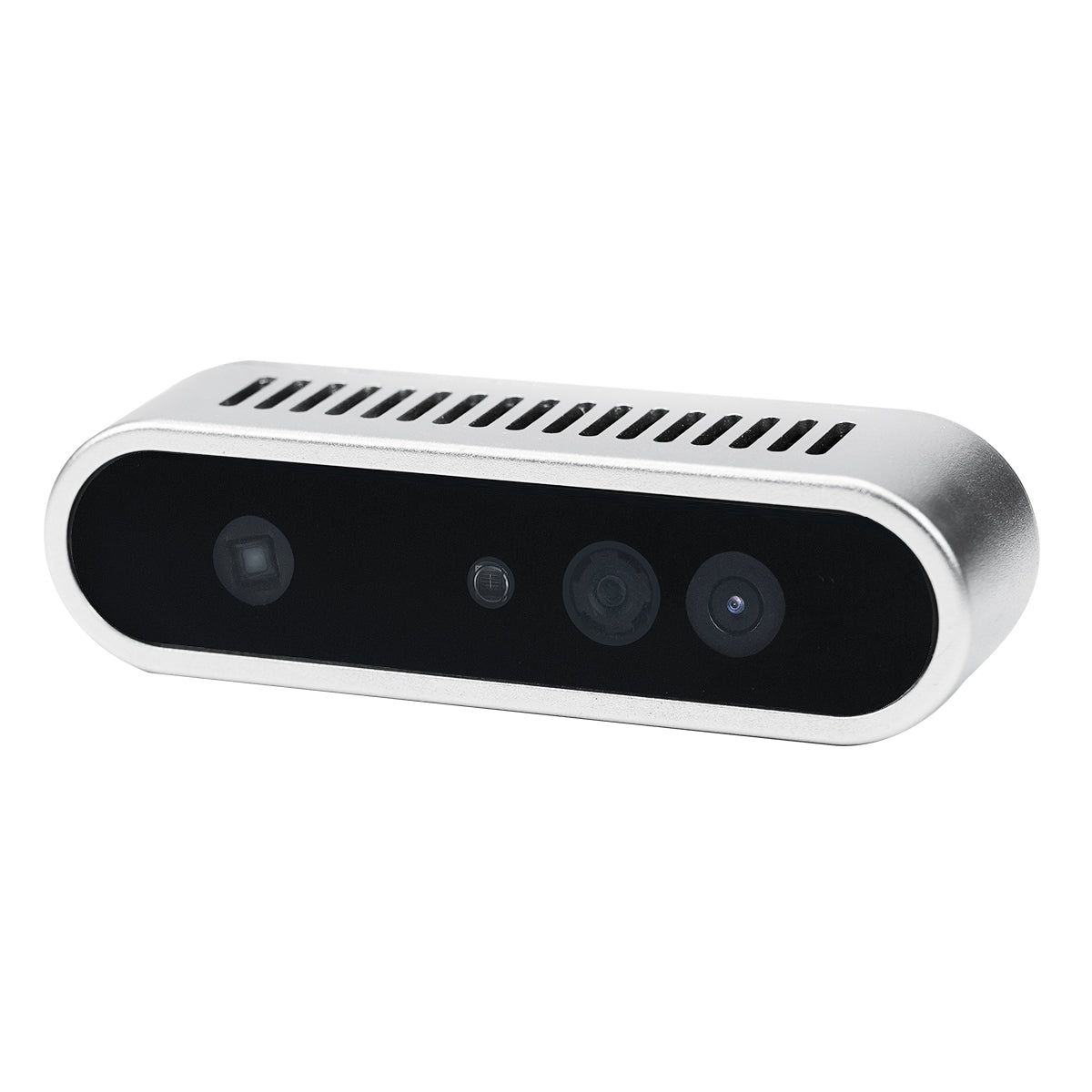
1 / 1Cogalloy Aurora930 Pro Structured-Light RGB-D Depth Camera
Compact structured-light RGB-D camera for ROS 2 robots needing local 3D perception: aligned depth, colour and infrared at 640 × 400 @ 12 fps, a 74° × 51° field of view, and onboard D2C/ASIC processing.
- D2C-aligned RGB-D: Onboard Depth-to-Color alignment registers depth and colour before the host pipeline; still calibrate the camera frame on the finished robot.
- 640 × 400 @ 12 fps: Published depth, RGB and IR streams pair a 74° × 51° field of view with compact processing requirements.
- 0.3–3 m engineering range: The retail page lists 15–300 cm while the manual lists 30–300 cm; validate the 15–30 cm boundary on the delivered module.
- <1.6 W average power: Integrated depth ASIC and ISP reduce peripheral processing; design the moving robot for stable 5 V power up to 1.5 A.
Price
US$149.99
No account or payment needed. We usually confirm availability, lead time, shipping, and total price within 12 hours.
Or email us directly: sales@cogalloy.comShipping options and final delivery cost are shown at checkout.
PERCEPTION DATA
Align depth with colour before it enters your robot stack.
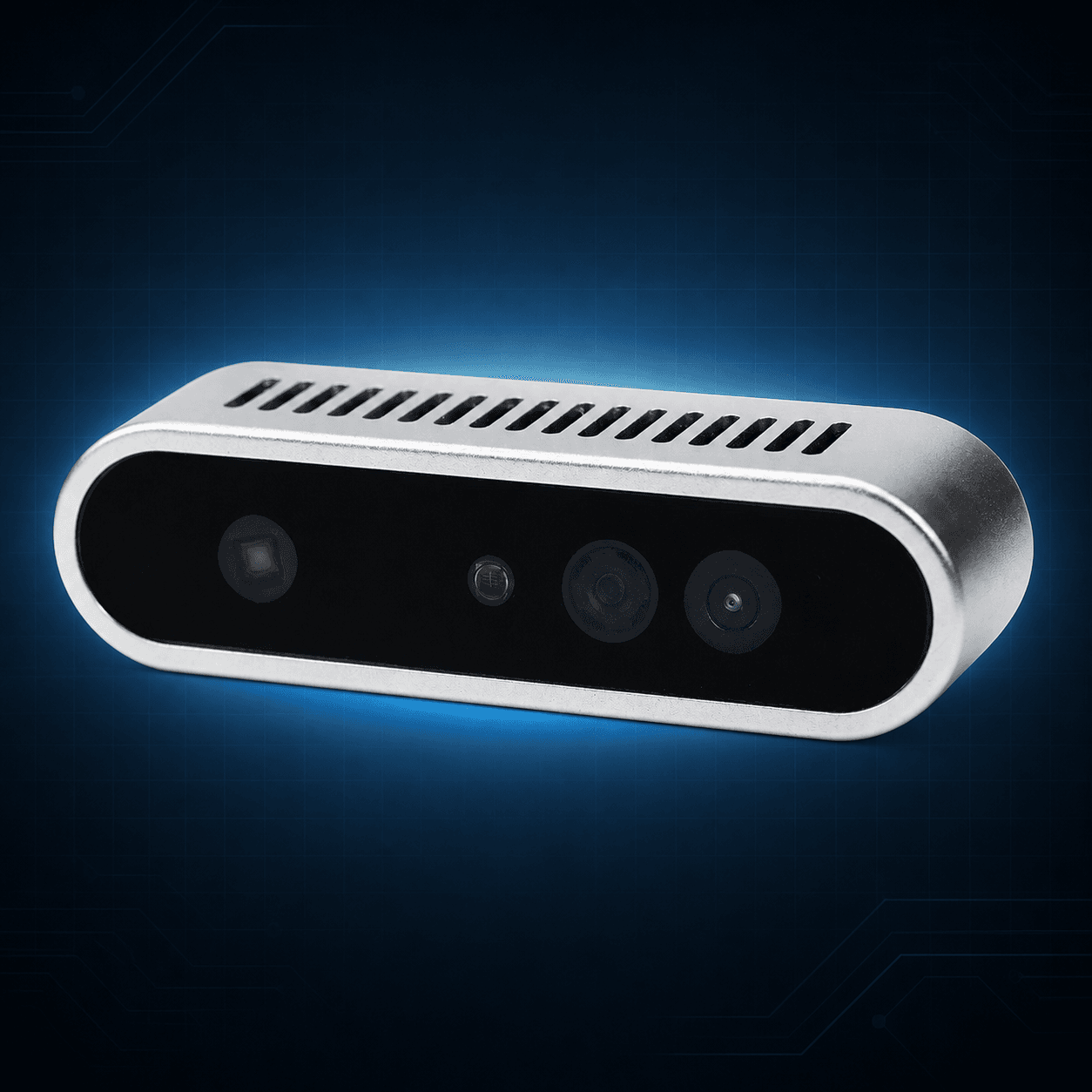
Structured-light optics, a depth ASIC and ISP turn the module into a compact RGB-D sensing path. Hardware D2C alignment makes registered depth and colour available at the camera level, reducing host-side preparation while leaving system calibration under your control.
- 16-bit Raw depth, NV12 RGB and 8-bit Raw IR for multimodal perception.
- Published default: depth, RGB and IR at 640 × 400 @ 12 fps.
- Use registered data for point clouds, local object localisation, reconstruction and visual-positioning experiments.
OPERATING ENVELOPE
Choose the view and distance envelope deliberately.
The published 74° × 51° view and close-range structured-light design suit local 3D work around a robot. The retail page states 15–300 cm, whereas the technical manual states 30–300 cm; use 0.3–3 m as the dependable planning range until your delivered hardware is tested.
- Depth accuracy: ±8 mm @ 1 m; published precision: 3 mm @ 0.5 m and 7 mm @ 1 m.
- Published operating illumination: 3–80,000 lux; inspect glossy, transparent, dark and backlit targets in the actual scene.
- Use it for local 3D perception; pair it with the appropriate LiDAR/odometry stack for global navigation.
MECHANICAL + ELECTRICAL
Treat mounting, power and frames as part of the sensor.
The 76.5 × 20.7 × 21.8 mm module has a 40 mm baseline and USB 2.0 Wafer connector. A rigid camera bracket, controlled cable routing and a clean 5 V supply are prerequisites for repeatable results on a moving platform.
- Design the supply for 5 V ±10% and up to 1.5 A; published average consumption is below 1.6 W.
- Add strain relief so cable movement cannot change the camera pose or interrupt the USB link.
- After final assembly, verify the camera frame, D2C registration and camera-to-base transform before using depth in planning or grasping.
SOFTWARE + ACCEPTANCE
Validate the full perception path before autonomy depends on it.
Linux, ARMv8, ROS and Windows are listed as supported environments. The camera can be used through the supported SDK for standalone applications or through the matching ROS/ROS 2 package; the delivered software, firmware and host image must be verified together.
- Bring up depth, RGB and IR individually, then verify timestamps, alignment and the selected frame rate.
- Test representative materials, lighting, target motion and recovery behaviour on the completed robot.
- Keep Class 1 optical safety intact: do not modify the projector, lenses or enclosure.
Related tutorials
Build with your parts
IntermediateAurora930 Pro: RGB-D Bring-Up and ROS 2 / OpenCV Validation
Validate aligned depth, RGB and IR streams from the Aurora930 Pro before using the camera for perception decisions.
Read tutorial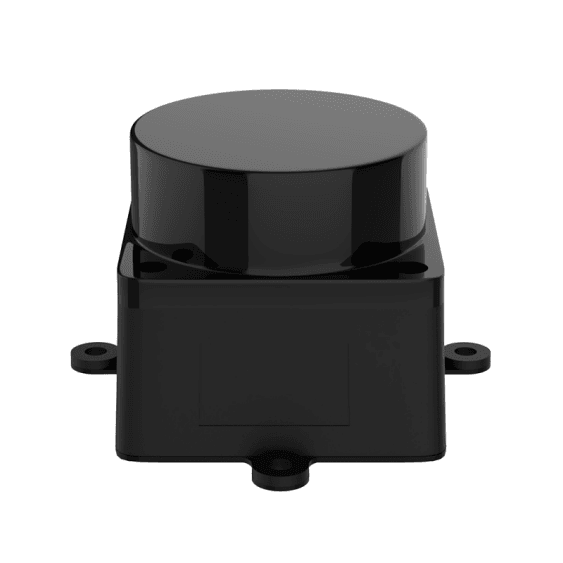 Intermediate
URDF and TF: Frames for a Tracked Base, LiDAR and RGB-D Camera
Create a measured, inspectable frame tree for the base, MS200 LiDAR and Aurora930 Pro camera before mapping or perception.
Read tutorial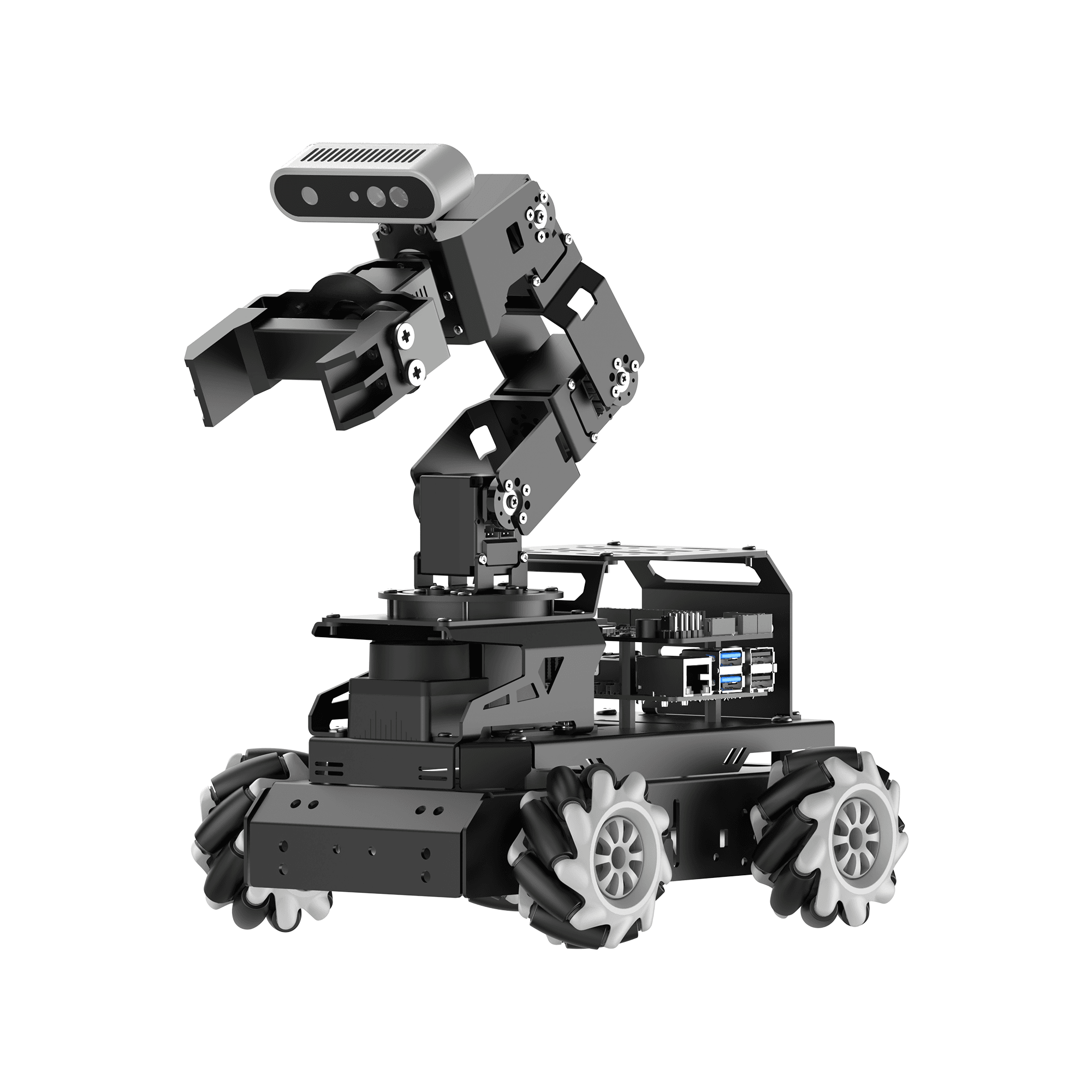 Advanced
Cogalloy L1 6-DOF Arm: Safe Motion Planning and Bench Acceptance
Establish a measured arm model, protected servo rail and conservative motion limits before using MoveIt 2 planning on the 6-DOF module.
Read tutorialProduct details
Everything you need to evaluate the fit.
Clear product information, technical specifications and compatibility details—kept separate from the purchase decision.
Overview
Cogalloy Aurora930 Pro — structured-light RGB-D for close-range robot perception
Aurora930 Pro is a compact RGB-D depth camera for robots that need to understand shape, distance and colour at the same time. Its structured-light optics, onboard ASIC depth processor and ISP produce depth, RGB and infrared streams without making the host perform every low-level image-processing step.
It is a strong fit for local object localisation, point-cloud inspection, scene reconstruction, visual positioning and manipulation experiments. It is not a replacement for a long-range navigation LiDAR: use the depth camera where three-dimensional detail matters near the robot, and validate the complete perception stack before it can influence motion.
What the data path gives you
- 16-bit Raw depth, NV12 RGB and 8-bit Raw IR are available for a multimodal perception pipeline.
- Built-in Depth-to-Color (D2C) alignment registers depth and colour at the camera level. It reduces preprocessing work, but it does not replace the camera-to-robot extrinsic calibration required after installation.
- The published default stream is 640 × 400 at 12 fps with a 74° × 51° field of view. Use the stream budget, host USB path and target motion to decide whether this is suitable for your task.
Define the operating envelope before integration
The retail specification lists a 15–300 cm working distance, while the separate technical manual lists 30–300 cm. For dependable robot planning, treat 0.3–3 m as the engineering range until the exact delivered module, firmware, target material and mounting geometry have been verified. Do not make autonomous behaviour depend on the 15–30 cm boundary without measurement on the finished robot.
Published illumination is 3–80,000 lux and the module is rated Class 1 laser safety. Strong sunlight, backlight, glossy, transparent and low-reflectivity targets still need application-level testing; a specification range is not a scene-performance guarantee.
Integration checklist
- Use the specified USB 2.0 Wafer connection with strain relief and a stable 5 V supply sized for up to 1.5 A.
- Rigidly mount the camera, define its frame, then verify depth/RGB alignment and camera-to-base transforms after final assembly.
- Bring up every stream with the matched SDK or ROS package before starting VSLAM, reconstruction, recognition or grasping work.
- Test representative targets, lighting, motion and failure handling on the complete robot before enabling autonomous actions.
Software path
The published compatibility list includes Linux, ARMv8, ROS and Windows. ROS is optional: use the supported SDK for standalone host applications, or integrate the camera with the matching ROS/ROS 2 package. Confirm the delivered software package and host image before deployment.
Technical specifications
Power
5 V ±10%, supply sized up to 1.5 A; average <1.6 W
Baseline
40 mm
Firmware
USB OTA update supported
RGB data
NV12
Hot start
<300 ms (published)
Interface
USB 2.0 Wafer connector
Depth data
16-bit Raw
Mechanical
76.5 × 20.7 × 21.8 mm; 40 mm baseline; aluminium housing with mounting holes
Laser safety
Class 1
Infrared data
8-bit Raw
Depth accuracy
±8 mm @ 1 m
Default streams
Depth / RGB / IR: 640 × 400 @ 12 fps
Depth precision
3 mm @ 0.5 m; 7 mm @ 1 m (technical manual)
Operating humidity
0–95% RH, non-condensing
System compatibility
Linux, ARMv8, ROS and Windows
Operating temperature
−10 to 55 °C
Perception technology
3D structured light with onboard ASIC depth processing and ISP
Operating illumination
3–80,000 lux; validate strong sunlight and difficult surfaces in the final scene
Published field of view
74° H × 51° V (retail specification)
Depth-to-colour alignment
Hardware D2C; published hardware and software alignment modes
Engineering planning range
0.3–3 m until the delivered module is validated
Published working distance
15–300 cm (retail specification); the technical manual lists 30–300 cm
Shipping & support
Choose your destination at checkout to see the available shipping methods. Need integration advice before ordering? Our support team can help you choose compatible components.
In the box
Package contents
Cogalloy Aurora930 Pro RGB-D depth camera module
Structured-light camera module with integrated depth ASIC and ISP.
Connection and mounting accessories
Cable, bracket and fastener contents depend on the ordered configuration. Check the order confirmation before assembly; do not assume a host cable or bracket is included unless listed.
Software and technical materials
Use the matched SDK, ROS package and examples for the delivered configuration. These are host- and image-dependent software resources, not a substitute for system validation.
Expert support
Frequently asked questions
What is the reliable working range for robot design?
The retail specification lists 15–300 cm, while the technical manual lists 30–300 cm. Use 0.3–3 m as the dependable engineering range until you have verified the delivered module, firmware, target material and mounting. Do not make autonomous behaviour depend on the 15–30 cm boundary without measurement.
Can Aurora930 Pro replace a 2D LiDAR?
No. It provides local RGB-D 3D perception, not a long-range planar navigation sensor. A depth camera and a LiDAR/odometry stack can complement each other: use depth for nearby geometry and use the navigation stack appropriate to the robot’s global task.
What does D2C alignment solve, and what does it not solve?
D2C aligns depth and colour images at the camera level, helping a host associate colour with depth. It does not calibrate the camera’s physical pose on your robot. You must still verify the camera frame and camera-to-base transform after final assembly.
Can I use it with ROS 2 or a standalone Python program?
Yes, with the matched SDK or driver package. ROS is optional for standalone applications, but use the supported SDK and examples rather than treating the module as a generic UVC webcam. Confirm the delivered software package and host image before deployment.
Will it work outdoors or on glossy and transparent objects?
The published illumination range is 3–80,000 lux, but structured-light depth quality remains scene-dependent. Test direct sunlight, backlighting, dark, glossy, translucent and transparent targets on the completed robot before relying on their depth values.
What power and mechanical provisions are required?
Provide stable 5 V ±10% power sized up to 1.5 A, route the USB 2.0 Wafer cable with strain relief and mount the 76.5 × 20.7 × 21.8 mm module rigidly. Recheck frames and alignment after the final bracket is tightened.