 1 / 1
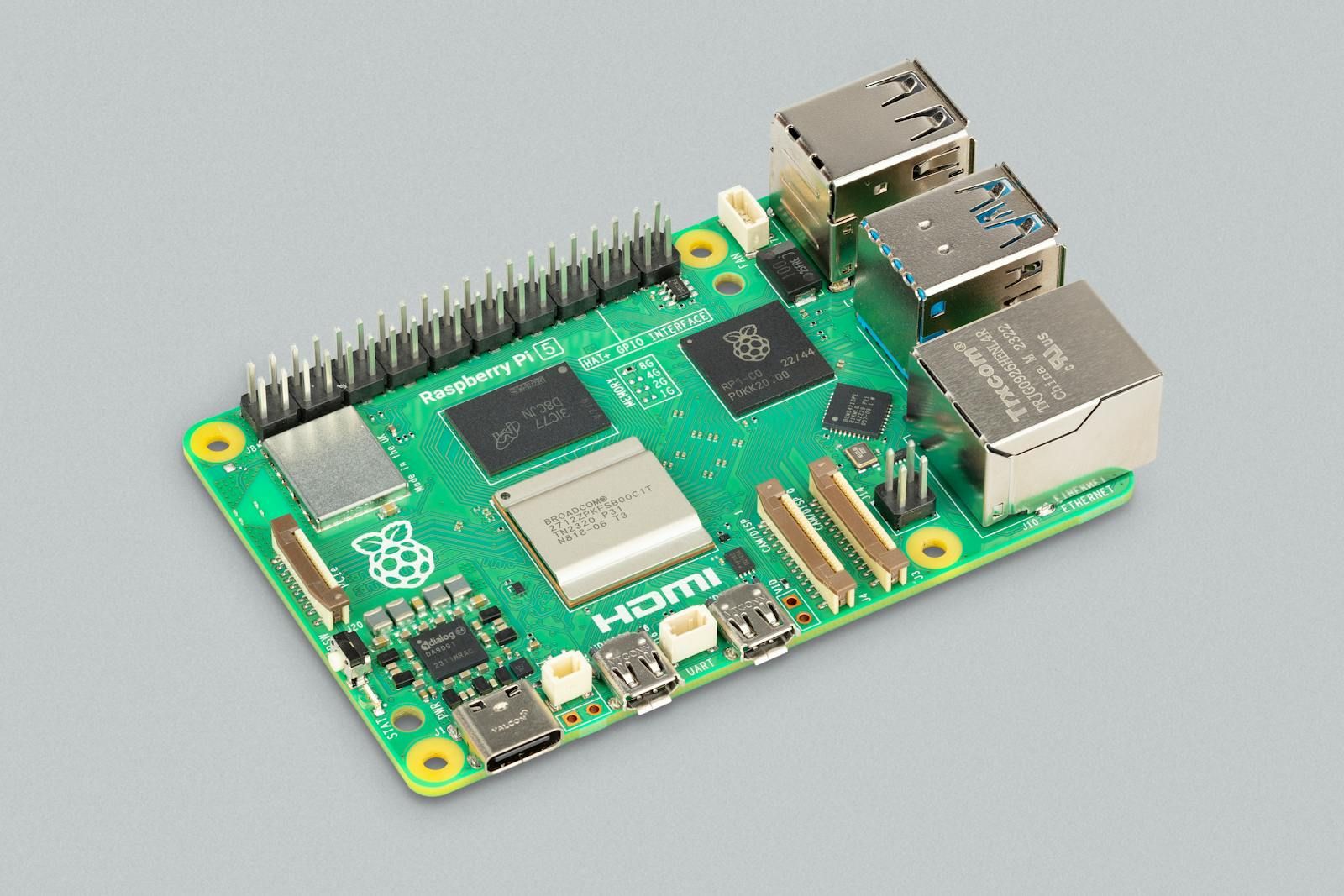
1 / 1Raspberry Pi 5 Model B, 8 GB Single-Board Computer
An 8 GB Raspberry Pi 5 Model B bare board for Linux, ROS 2, sensing and robot applications. Quad-core 2.4 GHz Cortex-A76 compute, PCIe/MIPI/USB 3.0 expansion and a 5 V / 5 A power requirement make it the high-level host — not the real-time motor controller. Power, cooling, storage, cables and mounting are separate.
- 8 GB for profiled multi-node workloads: Give ROS 2 nodes, logs, tools and camera pipelines more memory headroom after validating the actual workload.
- A compute host, not a motor controller: Keep Linux and high-level robotics on the Pi while a dedicated controller owns deterministic motor, encoder and safety I/O.
- High-bandwidth paths for a real robot: MIPI, PCIe 2.0 ×1, simultaneous USB 3.0 and Gigabit Ethernet support sensing, storage and integration choices.
- Power and cooling must be designed in: Use a 5 V / 5 A USB-C supply and active cooling for sustained work, then validate the final enclosure and peripheral load.
Price
US$175.00
No account or payment needed. We usually confirm availability, lead time, shipping, and total price within 12 hours.
Or email us directly: sales@cogalloy.comShipping options and final delivery cost are shown at checkout.
COMPUTE ROLE
Make this the Linux and ROS 2 host — not the real-time layer.
Raspberry Pi 5 runs the upper layer of the robot: ROS 2 nodes, networking, visualization, logging and application code. Pair it with a dedicated real-time controller for motors, encoders and safety-sensitive I/O so each layer has a clear job.
- 2.4 GHz quad-core 64-bit Cortex-A76 CPU
- 8 GB LPDDR4X-4267 memory for measured multi-process workloads
- Current Raspberry Pi OS Trixie and legacy Bookworm support Raspberry Pi 5
HIGH-BANDWIDTH I/O
Choose the interface path before selecting the peripheral.
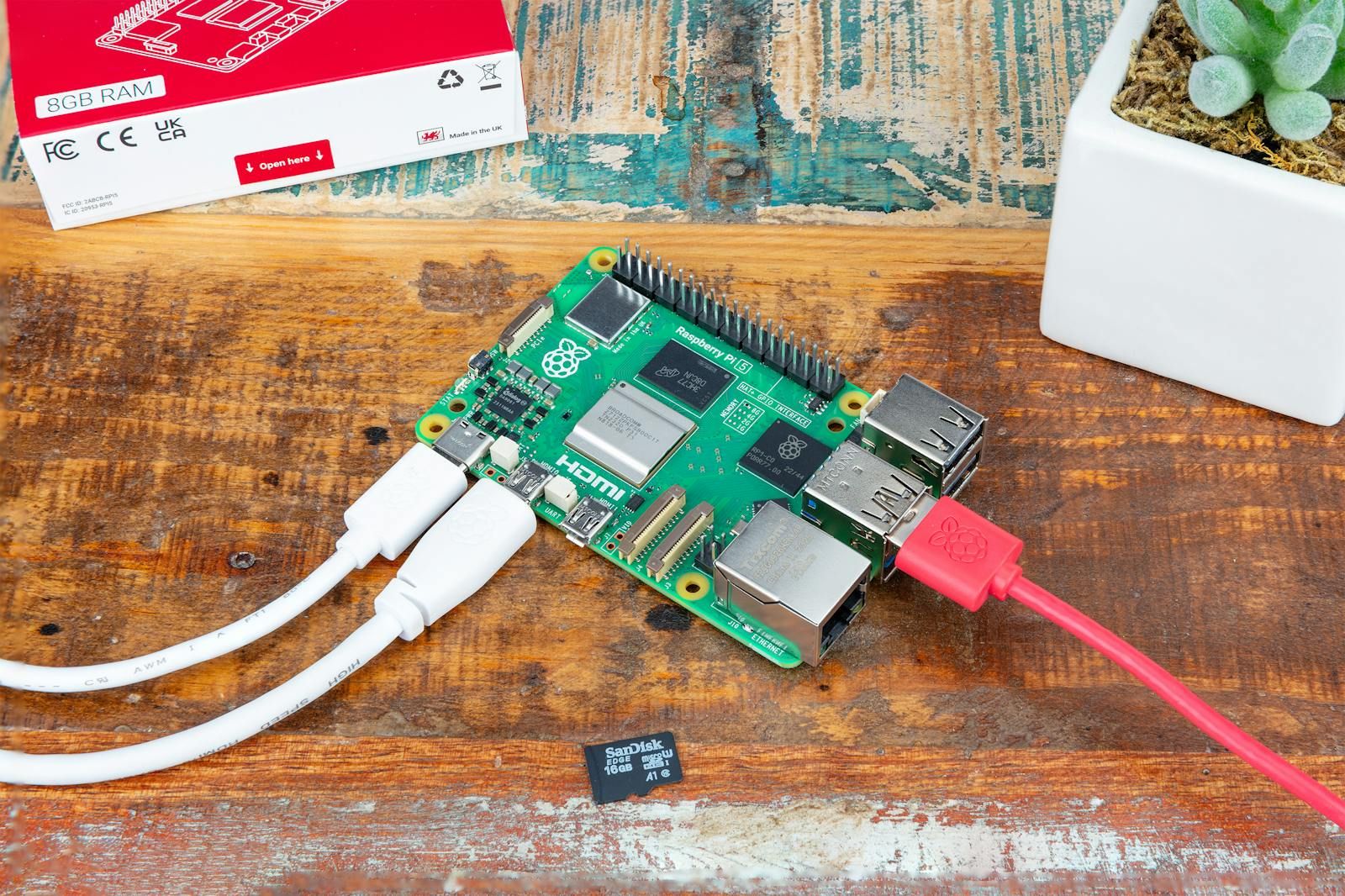
Two four-lane MIPI ports, PCIe 2.0 ×1, USB 3.0 and Gigabit Ethernet make the board flexible for cameras, displays, storage and networked development. NVMe needs a separate compatible M.2 HAT or adapter, and every MIPI/GPIO connection needs its matched cable and software configuration. The illustration is a connection reference: any cable and microSD card shown are not included.
- 2 × 4-lane MIPI camera/display transceivers
- microSD SDR104 and PCIe 2.0 ×1 expansion
- 2 × USB 3.0 at simultaneous 5 Gbps plus Gigabit Ethernet
POWER AND THERMAL
Give the finished robot a verified 5 V / 5 A path.
A high-quality 5 V / 5 A USB-C supply with PD support is the recommended basis for the full peripheral budget. A 5 V / 3 A source restricts downstream USB current, and sustained compute needs active cooling. Test the real battery, wiring, controller and sensor load in the final enclosure. Cables and microSD media in the reference image are separate accessories.
- Recommended input: USB-C 5 V / 5 A with Power Delivery support
- 5 V / 3 A operation limits the downstream USB peripheral budget to 600 mA
- Active cooling is recommended for sustained mapping, vision, compilation or logging
FORM FACTOR
Fit the board from the mechanical reference, then verify the physical sample.
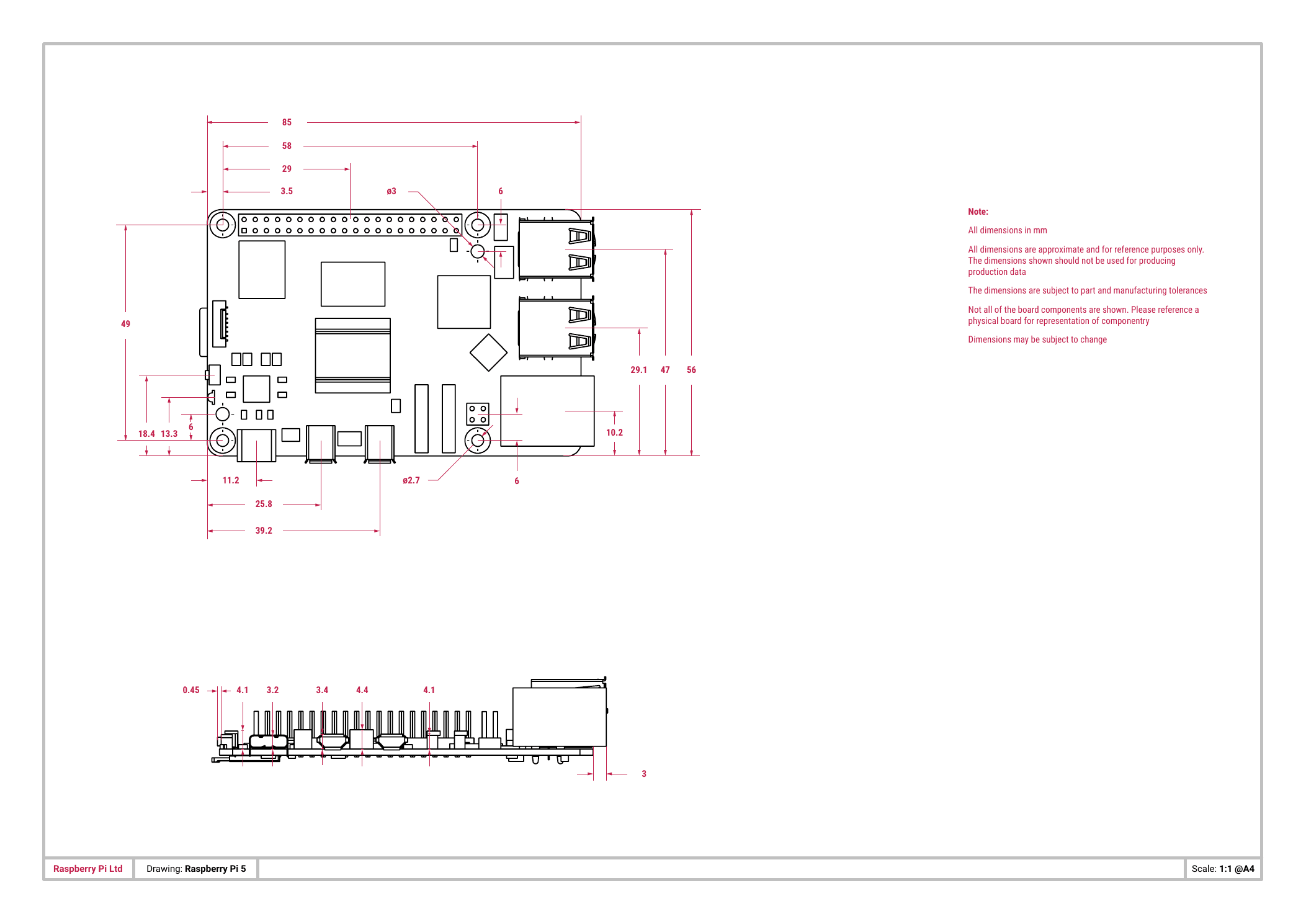
The board footprint is 85 × 58 mm with four Ø2.7 mm reference mounting holes. Use the drawing for placement planning, but use a physical board and approved mechanical data for production fixtures because manufacturing tolerances and component representation can change.
- 85 × 58 mm board footprint
- 4 × Ø2.7 mm reference mounting holes
- Keep cable bend radius, cooling airflow and connector access clear
Related tutorials
Build with your parts
 Beginner
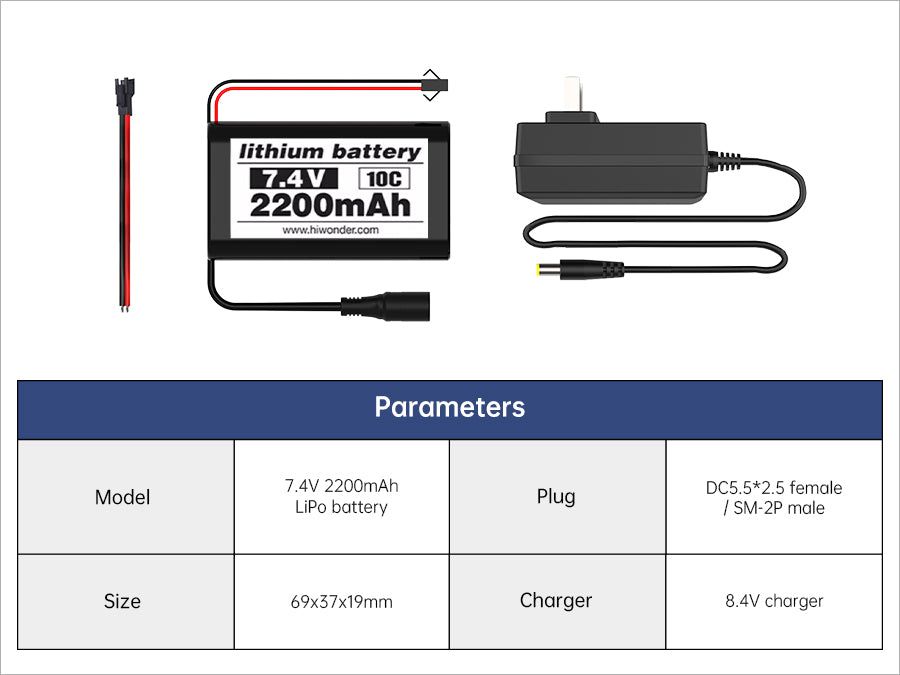
7.4 V 2200 mAh Battery Pack: Compatibility and Preflight
Confirm voltage, connectors, polarity and charge path before a 7.4 V battery pack becomes part of a robot power design.
Read tutorial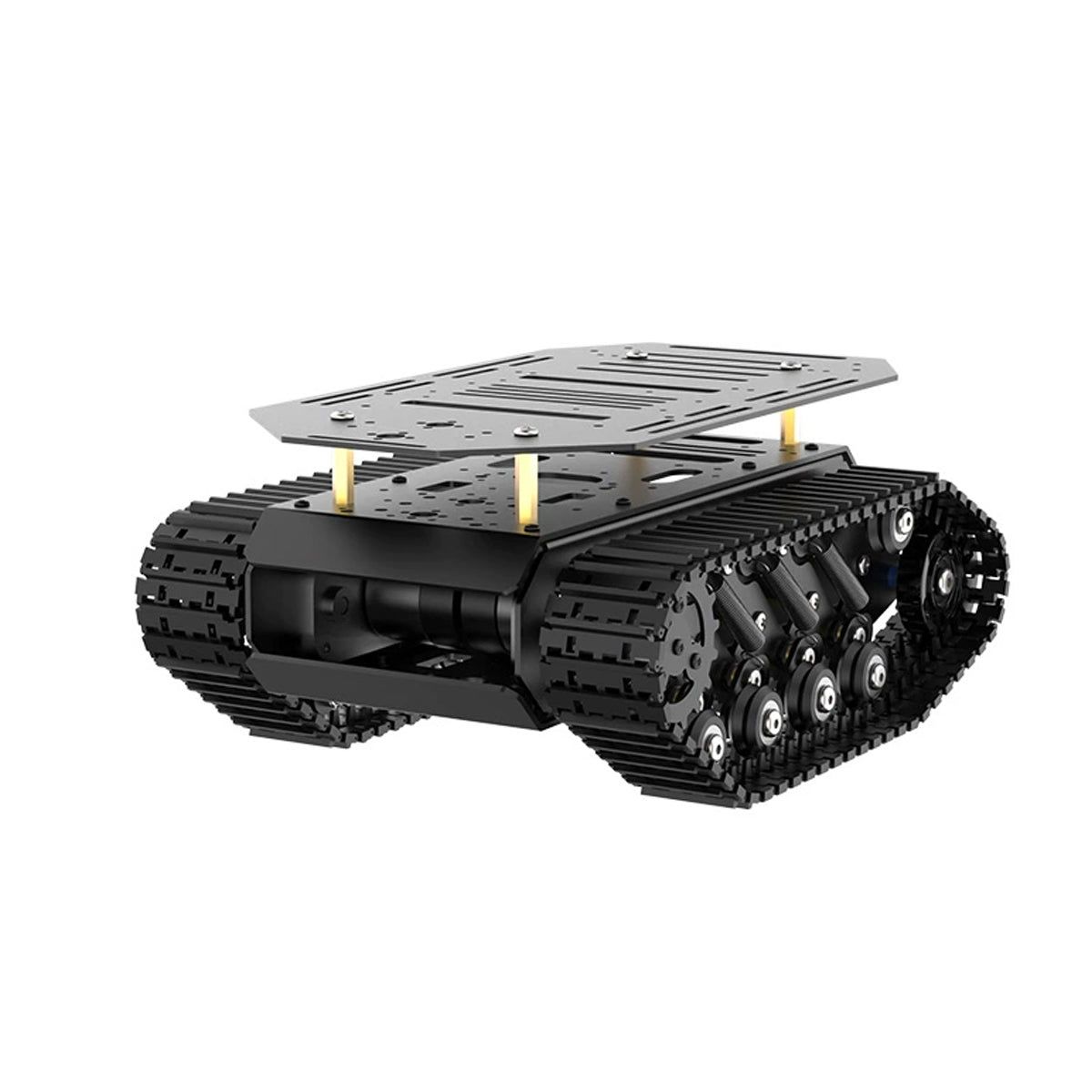 Beginner
Cogalloy T1 Advanced: Delivery, Power and Wiring Inspection
Inspect the delivered tracked chassis, its included 11.1 V battery system and all expansion wiring before the first powered test.
Read tutorial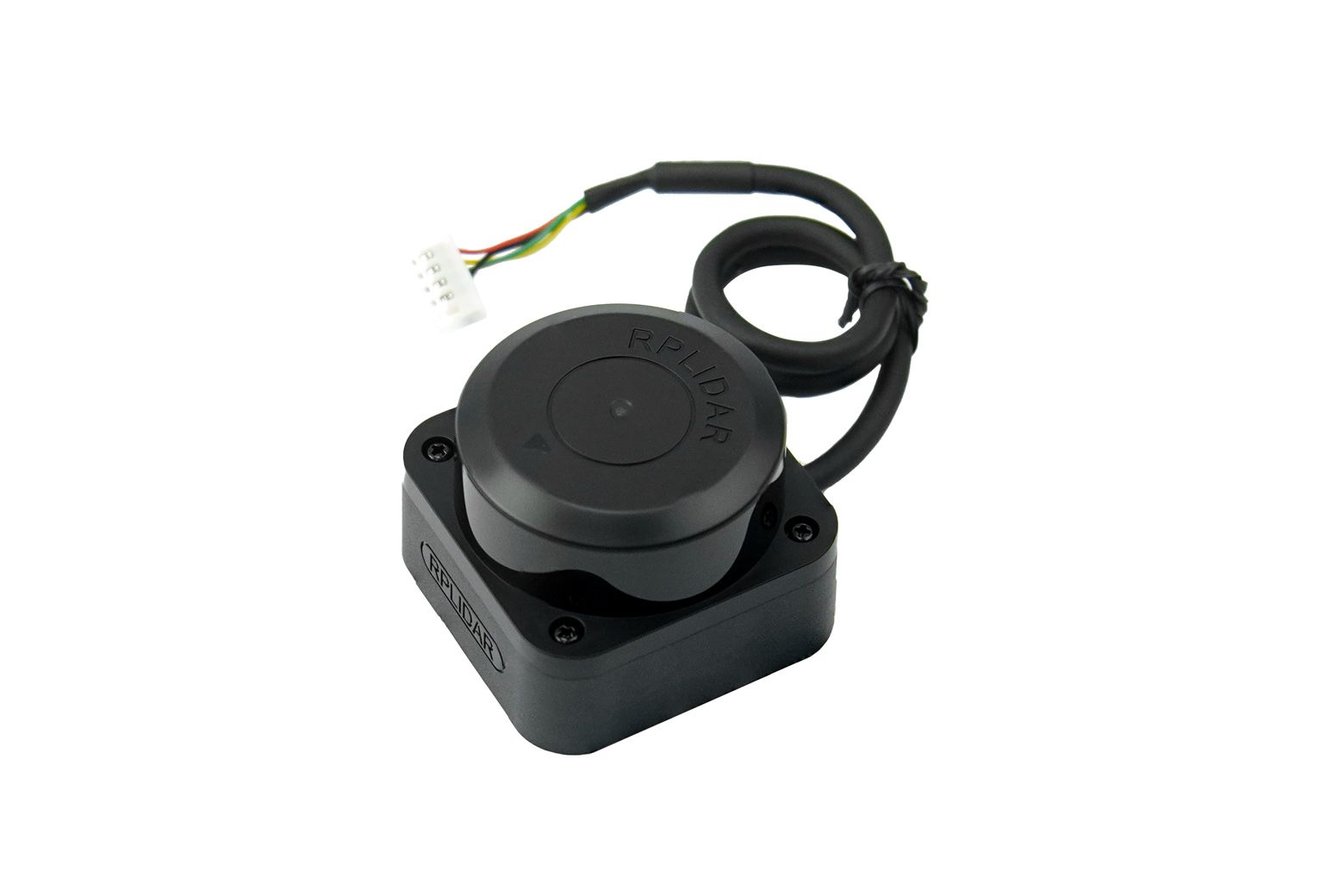 Intermediate
RPLIDAR C1: LaserScan Bring-Up and Acceptance
Bring up the RPLIDAR C1 with its verified power, TTL UART and frame convention before it is used for SLAM or obstacle decisions.
Read tutorialProduct details
Everything you need to evaluate the fit.
Clear product information, technical specifications and compatibility details—kept separate from the purchase decision.
Overview
The Linux and ROS 2 host — not the motor controller
Raspberry Pi 5 Model B with 8 GB of LPDDR4X memory is the computer layer for a robot: it runs Linux, ROS 2 nodes, networking, logging, visualization and the applications that coordinate sensors and actuators. A 2.4 GHz quad-core 64-bit Arm Cortex-A76 CPU gives it substantially more headroom than earlier Raspberry Pi generations, but deterministic motor, encoder and safety I/O should still live on a dedicated real-time controller.
Treat 8 GB as capacity for a measured workload, not a promise that every AI model will run locally. Camera resolution, inference model, storage speed, recording rate, thermal design and the rest of the robot determine the real result.
I/O you can plan a robot around
The board offers two four-lane MIPI camera/display transceivers, a PCIe 2.0 ×1 FFC interface, two USB 3.0 ports that can operate simultaneously at 5 Gbps, two USB 2.0 ports, Gigabit Ethernet, dual-band 802.11ac Wi-Fi and Bluetooth 5.0 / BLE. It also has dual micro-HDMI display outputs, a standard 40-pin GPIO header, RTC battery connector, UART debug connector and PWM-fan connector.
PCIe is an exposed board interface rather than an M.2 socket: NVMe storage needs a compatible M.2 HAT or adapter. Likewise, MIPI and GPIO connections need the correct cable, pinout, voltage and software support. Do not connect motors, high-current loads or unknown-voltage signals directly to the board.
Power and cooling are part of the product choice
For the full peripheral budget, use a high-quality USB-C 5 V / 5 A supply with Power Delivery support. A 5 V / 3 A supply may boot the board, but it limits the downstream USB peripheral budget to 600 mA; it is not the preferred choice for a sensor-rich robot. Plan the supply, fuse, wiring, controller link and peak USB load together.
Raspberry Pi specifies a 0–70 °C operating temperature range. For sustained mapping, vision, compilation or logging, fit active cooling and test the temperature in the final enclosure rather than on an open bench. Current Raspberry Pi OS Trixie and legacy Bookworm releases support Raspberry Pi 5; older Raspberry Pi OS releases do not.
What this SKU includes
COG-RPI5-8GB is the 8 GB bare board only. It does not include a USB-C power supply, active cooler, microSD card, SSD/HAT, case, HDMI/MIPI cables, Ethernet cable or robot mounting hardware. The integration reference image illustrates compatible connections only; the cables and microSD card pictured are not included.
Before autonomous operation, validate the boot image, supply voltage, cooling, storage, controller communication, USB/MIPI devices and cable restraint. Build up from the host and controller link to individual sensors, then verify motion with the robot safely supported.
Technical specifications
USB
2 × USB 3.0, simultaneous 5 Gbps operation; 2 × USB 2.0
Memory
8 GB LPDDR4X-4267 SDRAM, soldered on board and not user-upgradeable
Graphics
VideoCore VII GPU with OpenGL ES 3.1 and Vulkan support
Processor
Broadcom BCM2712 2.4 GHz quad-core 64-bit Arm Cortex-A76 with cryptography extensions, 512 KB L2 per core and 2 MB shared L3 cache
In the box
Raspberry Pi 5 Model B, 8 GB bare board ×1
Networking
Gigabit Ethernet, dual-band 802.11ac Wi-Fi and Bluetooth 5.0 / BLE; PoE+ requires a separate compatible HAT
Not included
Power supply, active cooler, storage, HATs, case, cables, peripherals and robot mounting hardware
Mounting holes
4 × Ø2.7 mm reference holes; use official drawing and physical sample for final mechanical design
Board footprint
85 × 58 mm
GPIO and system
Standard 40-pin GPIO header, power button, UART debug connector, RTC battery connector and 4-pin PWM fan connector
Role in a robot
Linux, ROS 2, networking, perception and application host; use a dedicated controller for deterministic motor and encoder I/O
Product identity
Raspberry Pi 5 Model B, 8 GB bare-board configuration
Storage and PCIe
microSD slot with SDR104 support; PCIe 2.0 ×1 FFC interface requires a separate M.2 HAT or adapter for NVMe
Thermal guidance
Active cooling recommended for sustained compute workloads; validate temperature in the finished enclosure
Display and video
2 × micro-HDMI, up to dual 4Kp60 HDR display output; 4Kp60 HEVC decoder
Recommended input
High-quality USB-C 5 V / 5 A supply with Power Delivery support
Lower-power behaviour
5 V / 3 A input can limit the downstream USB peripheral budget to 600 mA
Operating temperature
0–70 °C
Camera and display I/O
2 × 4-lane MIPI camera/display transceivers; configure the cable, device tree and software for the selected sensor/display
Supported Raspberry Pi OS
Current Trixie and legacy Bookworm releases; releases older than Bookworm do not support Raspberry Pi 5
Shipping & support
Choose your destination at checkout to see the available shipping methods. Need integration advice before ordering? Our support team can help you choose compatible components.
In the box
Package contents
Raspberry Pi 5 Model B, 8 GB single-board computer
Bare board only; 8 GB LPDDR4X memory is soldered to the board.
Power and thermal hardware
USB-C power supply and active cooler are not included. Select them for the final robot load and enclosure.
Storage and expansion hardware
microSD card, M.2 HAT/adapter, SSD, PoE+ HAT and other HATs are not included.
Cables, case and mounting hardware
HDMI/MIPI/USB/Ethernet cables, case, peripherals and robot mounting hardware are not included.
Expert support
Frequently asked questions
Is this a complete Raspberry Pi kit?
No. COG-RPI5-8GB is one Raspberry Pi 5 Model B bare board with 8 GB memory. Power supply, active cooler, storage, case, cables, HATs, peripherals and mounting hardware are separate.
Is the 8 GB memory upgradeable?
No. The LPDDR4X memory is soldered to the board. This SKU is the 8 GB configuration; choose the memory size before purchase.
Can Raspberry Pi 5 directly drive motors or high-current loads?
No. It is the Linux and application host, not a motor driver or real-time controller. Use a dedicated controller and appropriate power stage for motors, encoders and safety-critical I/O.
What power supply should I use?
Use a high-quality USB-C 5 V / 5 A supply with Power Delivery support for the full peripheral budget. A 5 V / 3 A source can restrict downstream USB current to 600 mA, so validate the whole robot rather than relying on a phone charger.
Do I need active cooling?
It is strongly recommended for sustained mapping, vision, compiling, logging or other continuous workloads. Check temperature in the finished case because airflow and ambient conditions matter.
Can I use an NVMe SSD?
Yes, through the board's PCIe 2.0 ×1 FFC interface with a compatible M.2 HAT or adapter. The SSD and adapter are not included, and cable/firmware compatibility must be checked.
Which Raspberry Pi OS releases support it?
Current Raspberry Pi OS Trixie and legacy Bookworm support Raspberry Pi 5. Releases older than Bookworm do not. For ROS 2, select a supported 64-bit base image and verify your chosen distribution with its upstream support matrix.
What should I verify before autonomous operation?
Verify boot media, supply voltage, cooling, controller link, USB/MIPI devices, network and cable restraint. Test motion only after the host-controller-sensor system is stable and the robot is safely supported.